Kyushu University Beppu Hospital and the Ritsumeikan Group Team Up!|九州大学別府病院と立命館グループでコラボレーション!

I was largely delighted that Professor Takahashi from the School of Integrated Psychology at Ritsumeikan University OIC came to visit me “yet once again” (this is the second time in the last 10 days…)! The purpose of this visit was to hold a strategy meeting—with about five of us, including Dr. Mimori, the director of

B2B Seminar vol.28 “The Cutting Edge of Emotional Porn: Empathy Marketing on Social Media”|「感動ポルノ最前線 ~SNSの共感マーケティング~」

The discussion focused on emotional dynamics and the use of emotions in marketing, examining the interpretation of emotions and the concept of “emotional pornography.” Professor Hirahara provided a detailed explanation of the history of behaviorist psychology, and participants shared various perspectives on emotional control and the use of emotional pornography. 感情の動きとマーケティングにおける感情の利用について議論が行われ、感情の意味付けと「感動ポルノ」という概念について検討された。平原教授が行動主義心理学の歴史について詳しく説明し、参加者たちは感情の制御と感動ポルノの利用について様々な見解を共有した。

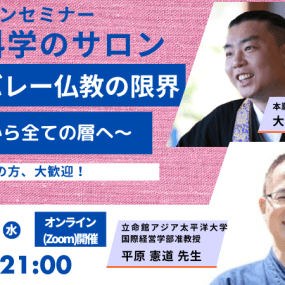
仏教と科学のサロン vol.72 “The Limits of Silicon Valley Buddhism: From the Elite to All Segments of Society”|「シリコンバレー仏教の限界 ~エリートから全ての層へ~」

During the meeting, there was a detailed discussion regarding U.S. and Israeli military attacks on Iran, the detention of the Venezuelan president, and the relationship between the AI companies Anthropic and OpenAI. Participants discussed how Anthropic’s AI was used to simulate the operation in Venezuela and the company’s exclusion from the Department of Defense. They

“D&I as a Management Strategy” Mini Lecture @ CIC Fukuoka|「経営戦略としてのD&I」ミニレクチャー@CIC福岡

On February 5th, I held a mini-lecture and panel discussion titled “D&I as a Management Strategy: What Silicon Valley Has That Fukuoka Doesn’t” at CIC Fukuoka, a beautiful and functional incubation facility located right in the heart of Tenjin, where my university, Ritsumeikan Asia Pacific University (APU)’s Fukuoka satellite, is based. Thanks to our two

Exploring Ways to Harness “Untapped Potential” at the School of management Retreat|経営学部リトリートにてAPUの「巨大ポテンシャル」の活用法を吟味する

Last Sunday, I participated in a “retreat” hosted by the School of Management (SoM) at APU (Ritsumeikan Asia Pacific University), where I am affiliated, held in the conference room and banquet hall of a historic hot spring inn. From 2:00 PM until well past 8:00 PM, we engaged in intensive discussions, resulting in a highly

【research】YouTube video on “DesProg: AI-Powered Dengue Severity Prognostication”|「DesProg: AIによるデング熱の予後診断システム」のYouTube動画を発見

Just the other day, while casually browsing YouTube videos, I was surprised to find a short explanatory video about the “DeSProg” project I worked on during my time at the University of Malaya. It seems Professor Dr. Rafdzah Ahmad Zakithe, the team leader, created it. It’s easy to understand, so please take a look. This

Emotionally dependent on ChatGPT?|ChatGPTって依存効果があるの?

素材記事:https://greatergood.berkeley.edu/article/item/can_you_get_emotionally_dependent_on_chatgpt 写真クレジット:the same as above As a psychological scientist, I find this a very interesting and entertaining phenomenon, but the fact is that this trend is growing rapidly and experts are becoming increasingly concerned. Alarm bells are ringing on the provider side, too, with OpenAI’s Sam Altman recently stating that he is “concerned.” The real

Digital transformation: making a difference to primary and respiratory care|デジタルヘルス:一次医療と呼吸器疾患のケアへ新たな価値を創造

On July 23, I participated in a webinar titled “Digital transformation: making a difference to primary and respiratory care” as part of a webinar series hosted by UMeHU (Universiti Malaya eHealth Unit) at the Faculty of Medicine, University of Malaya, my previous workplace. The lecturer was Dr. Hilary Pinnock. As a specialist in respiratory medicine,

Webinar for ASEAN Youth Organization|歴史あるASEAN Youth Organizationで「いきがい」ウェビナー登壇

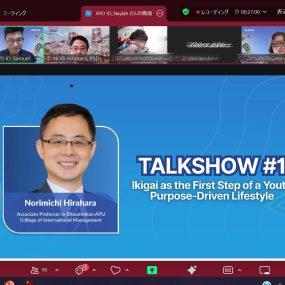
Yesterday, I gave a webinar on “Ikigai” at the request of the “ASEAN Youth Organization/AYO”, a very well-known non-profit organization in ASEAN even by prime ministers across ASEAN. With 45 minutes of lecture and 15 minutes of Q&A, I was very happy to hear good questions from the audience. We had 100 young and bright

Implantable Brain Device Cures Epilepsy|埋め込み型脳内デバイスでてんかんを治す

It is almost a frightening scientific and technological advancement…. A medical device has been developed that dramatically reduces seizure symptoms in patients with chronic epilepsy, which until now was considered nearly impossible to cure. Although neurosurgery is required because the device is placed directly over the brain, considering the fact that patients with this condition