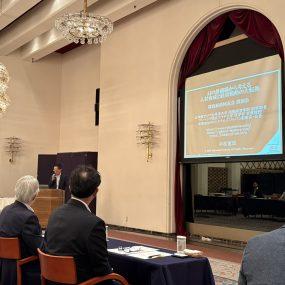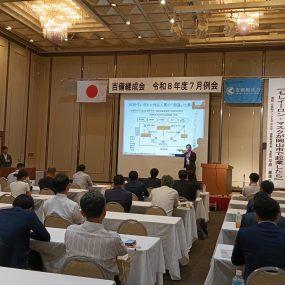
Lecture at the Gunma Association of Corporate Executives: “A Major Shift in Human Resource Development and Management Strategy from the Forefront of AI”|群馬経済同友会で講演「AIの最前線から考える人材育成と経営戦略の大転換」

One of the students in my senior-year seminar is from Gunma, and his father is Professor Omori, the current president of Kyoai Gakuen Maebashi International University. Through this connection, I was invited by the Gunma Association of Corporate Executives—of which Prof Omori is a senior member—to give a lecture. The event consisted of a 90-minute

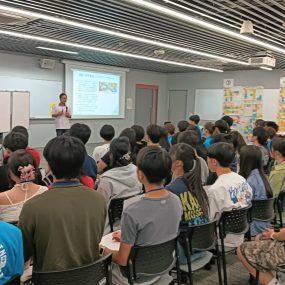
The Last Guest Speaker for the BEGIN event|BEGIN最後のゲストスピーカーとして登壇

I was invited as a guest speaker to “BEGIN,” an “inquiry-based workshop” held twice a year for high school students through the collaborative efforts of APU faculty and students. The details of the BEGIN program are as follows (https://www.apumate.net/event/begin/): [The BEGIN (Basic Education Growing Infinity Nexus) Program is a workshop designed to maximize your potential,

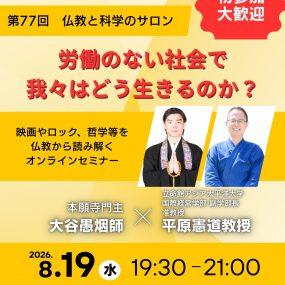
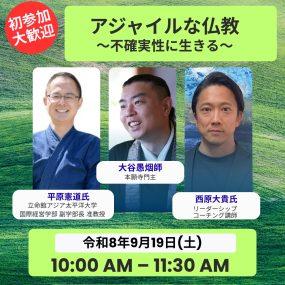
仏教と科学のサロン Vol. 77: “How will we live in a society without work?”|「労働のない社会で我々はどう生きるのか?」

The main topic of the discussion centered on the findings of social science research to date regarding “basic income/BI,” including reports that a two-year experiment in Finland resulted in an increase in the employment rate and a decrease in the number of people leaving their jobs. Professor Hirahara noted that, within the research communities of

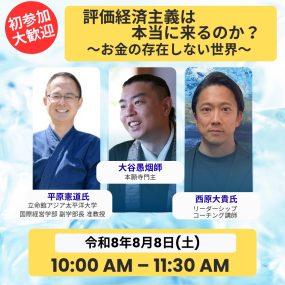
B2B Seminar Vol.33: “Is the “Reputation Economy” Really Coming? –A World Without Money–“|「評価経済主義は本当に来るのか?~お金の存在しない世界~」

This seminar centered on the themes of “reputation economics” and “a world without money,” with discussions focused on the “evaluation economy” as explained by Toshio Okada and Elon Musk’s vision for the future. The panelists examined the possibility of a transition from a monetary economy to a credit-based economy, and ultimately to an economy based

仏教と科学のサロン Vol. 76: “Will Physical AI Put an End to Manual Labor?”|「フィジカルAIで肉体労働もなくなるのか?」

A discussion on the future of physical AI and manual labor was held between His Eminence Otani Guwen, Head of the Hongwanji Sect, and Professor Hirahara. Professor Hirahara described physical AI as “the fusion of robotics and AI” and discussed the background behind the development of robotics such as Aibo and Asimo in perspective. During

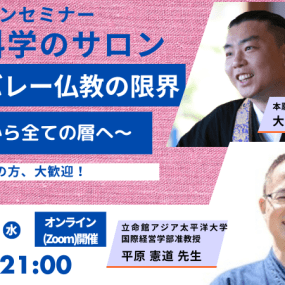
仏教と科学のサロン vol.72 “The Limits of Silicon Valley Buddhism: From the Elite to All Segments of Society”|「シリコンバレー仏教の限界 ~エリートから全ての層へ~」

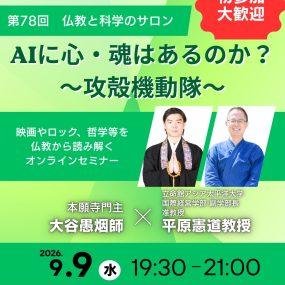
During the meeting, there was a detailed discussion regarding U.S. and Israeli military attacks on Iran, the detention of the Venezuelan president, and the relationship between the AI companies Anthropic and OpenAI. Participants discussed how Anthropic’s AI was used to simulate the operation in Venezuela and the company’s exclusion from the Department of Defense. They

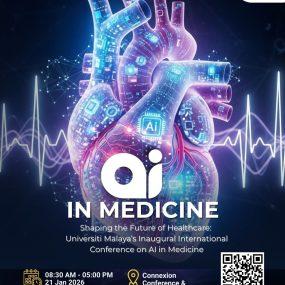
“AI in Medicine: Shaping the Future of Healthcare.”|今回は私は出ませんが…マレーシアかシンガポール滞在で興味がある方へ

LET’S CELEBRATE PROGRESS?AND SHAPE WHAT COMES NEXT. Universiti Malaya warmly invites you to join us at the INAUGURAL INTERNATIONAL CONFERENCE ON ARTIFICIAL INTELLIGENCE (AI) IN MEDICINE 2026, themed “AI in Medicine: Shaping the Future of Healthcare.” This one-day flagship conference brings together researchers, clinicians, industry leaders, and policymakers to showcase clinically validated AI solutions, translational

Emotionally dependent on ChatGPT?|ChatGPTって依存効果があるの?

素材記事:https://greatergood.berkeley.edu/article/item/can_you_get_emotionally_dependent_on_chatgpt 写真クレジット:the same as above As a psychological scientist, I find this a very interesting and entertaining phenomenon, but the fact is that this trend is growing rapidly and experts are becoming increasingly concerned. Alarm bells are ringing on the provider side, too, with OpenAI’s Sam Altman recently stating that he is “concerned.” The real

Deep security risk of generative AI|生成系AIの深すぎるリスク

https://govinsider.asia/intl-en/article/organisations-scarily-unprepared-for-generative-ais-security-risks-extrahop-report Generative AI can be a very powerful supporting tool in company operations, but it continues to be compromised with little or no thought given to security. Still, it is amazing that “81 per cent of Singaporean organisations report their employees are using generative AIs in the workplace”. Wow. workers in Singapore are basically using

【conf】Participated as a symposium presenter at the Kanagawa Society of Public Health|神奈川県公衆衛生学会にシンポジストとしてオンライン参加

I was the only one who attended online instead of from the larger venue in Yokohama. I reported on the use of big data and AI in Malaysia, using the response to Covid-19 as an example, and talked about the future international trends of medical bigdata and AI. I myself learned a lot from the